
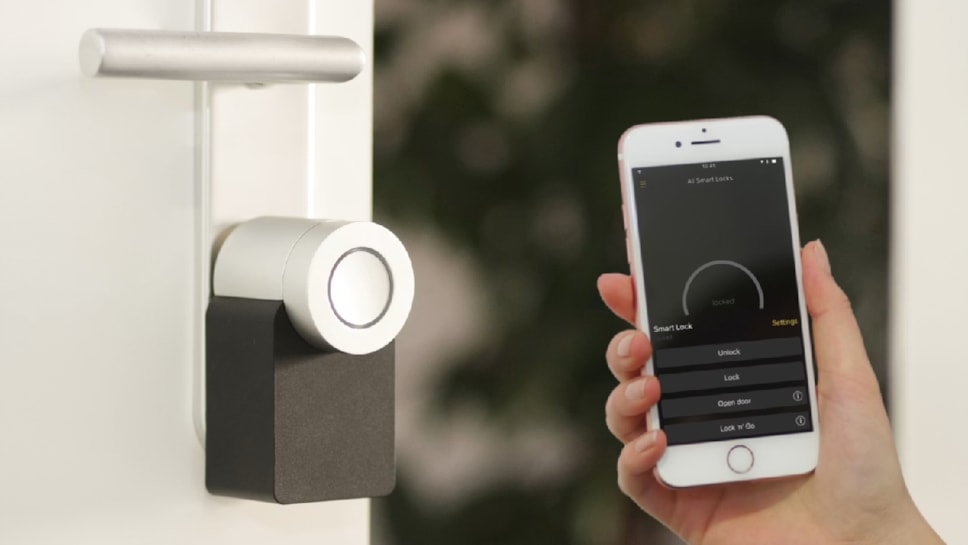
Your smart doorbell could be increasing your home insurance risk, here's 4 reasons why
Millions of Brits installed smart doorbells last year [1] with a 5000% surge in searches for the security system compared to this time last year [2]. But expert advice shows fancy tech could be doing more harm than good - if homeowners aren’t careful.
The security contradiction
With interest in home security systems up 30% recently [3], safety is clearly at the forefront of homeowners’ minds. Many are installing Ring, Nest or Yale devices for peace of mind against theft.
Tamzin Metcalfe, Home insurance expert at Go.Compare explains:
“Things like smart doorbells make life much easier, and they’re great tools. But you need to make sure your tech is actually working for you, rather than advertising a tech-savvy household full of expensive gadgets. It’s a bit of a Catch-22: the exact thing you bought to protect your home might actually end up attracting thieves who think a fancy doorbell means your house is full of pricey items like 4K TVs, bladeless fans or top-spec gaming consoles.”
Affluence clue
While a visible smart doorbell could deter opportunist burglars, criminologists argue that this savvy tech could signal to calculated criminals that you’re more likely to have expensive gadgets inside worth stealing [4].
If your household appears to own state-of-the-art tech, you could be making yourself more vulnerable to planned burglaries.
1. Signal jamming
Many homeowners are unaware of the prevalence of signal jamming devices linked to home break-ins and vehicle thefts. Devices capable of cutting your smart doorbell’s Wi-Fi connection can be bought online for as little as £30 [5]. A criminal can then use these to prevent your smart tech from recording or sending security alerts.
Even if your doorbell appears to be up and running, if one of these devices are used, you might find you have no footage to use as evidence if you need to make a claim.
2. Footage quality
Installing a smart doorbell is one thing, but obtaining useable footage is another. Homeowners tend to assume their smart tech is accurate enough but might neglect to check their device settings for quality.
Unusable footage could make it harder to claim. If the coverage range is poor, it might miss the incident entirely. Or if the video is grainy or shaky, it could be tricky to use as evidence. Plus, some security systems require a paid subscription to save clips - or else you might lose the footage.
3. Insurance blind spot
Research reveals that homeowners are already underinsured for the tech they own - 67% of Brits have never totalled the value of their home contents and laptops and tablets are among the most commonly forgotten items [6].
Installing flashy security features without checking your home contents cover exacerbates the risk of both theft and a claim that falls short.
Take the right measures to protect your home
Tamzin concludes:
“To get the most out of it, make sure your smart doorbell is set up correctly. Here are three things you can do right now if you have a smart doorbell:
- Check whether you need a monthly subscription to save and watch older footage. If someone tries to break in and you haven't activated that history, you won’t have any evidence to hand over to the police or your insurer.
- Check the camera angle and quality of the footage - like if it’s blocked directly by a hanging basket. If you capture footage and it’s just silhouettes where you can’t make out any faces, it won’t be much use.
- Check the connection, most smart doorbells rely on WiFi, so make sure yours reaches the front door. You could choose a model with a backup local memory card in case of signal jammers or WiFi issues.
It’s also the perfect time to update your contents insurance. Make sure your policy includes all your newest tech as well as designer clothing, smart TVs, or expensive jewellery - so if anything does happen, you’re fully covered for the replacement costs.”
Homeowners are advised to review both their smart doorbell security system and contents cover: https://www.gocompare.com/home-insurance/
Contact Information
Joel Lodge
Notes to editors
Tamzin Metcalfe is a home and pet insurance expert at Go.Compare.
- Telegraph
- Google Trends data ‘smart doorbell’ – 08/07/26
- Google Trends data ‘home security systems’ – 08/07/26
- Cranfield University Research
- BBC
- FromGoCompare'sown OnePoll survey of 2,000 UK adults
About Go.Compare
Go.Compare is a comparison website that enables people to compare the costs and features of a wide variety of insurance policies, financial products and energy tariffs.
It does not charge people to use its services and does not accept advertising or sponsored listings, so all product comparisons are unbiased. Go.Compare makes its money through fees paid by the providers of products that appear on its various comparison services when a customer buys through the site.
When it launched in 2006, it was the first comparison site to focus on displaying policy details rather than just listing prices, with the aim of helping people to make better-informed decisions when buying their insurance. It is this approach to comparing products that secured the company an invitation to join the British Insurance Brokers’ Association (BIBA) in 2008, and it is still the only comparison site to be a member of this organisation.
Go.Compare has remained dedicated to helping people choose the most appropriate products rather than just the cheapest and works with Defaqto, the independent financial researcher, to integrate additional policy information into a number of its insurance comparison services. This allows people to compare up to an extra 30 features of cover.
Go.Compare is part of Future Plc and is authorised and regulated by the Financial Conduct Authority (FCA).
More information can be found here www.gocompare.com or here https://www.futureplc.com/brands/