
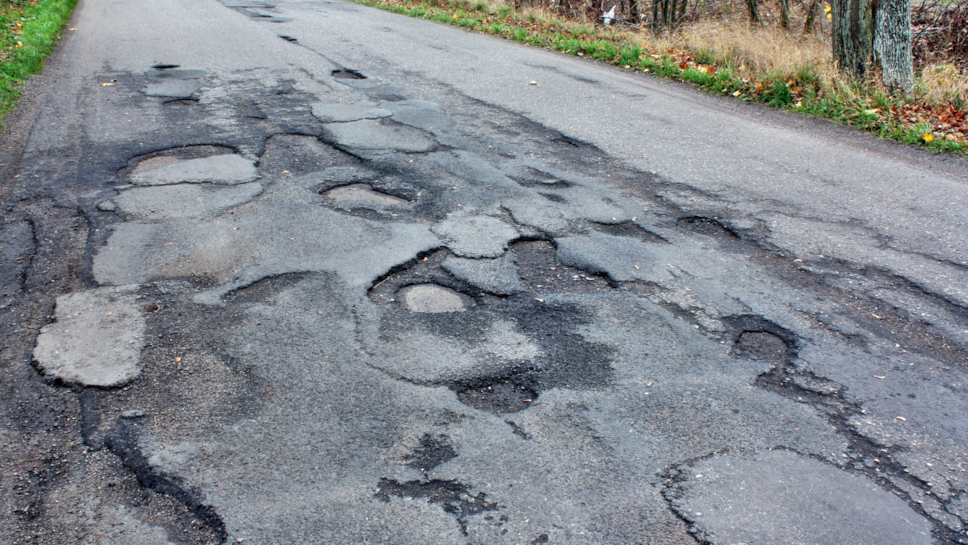
Pothole potluck: UK road conditions now in the international spotlight, as potholes are cited in concerns over transporting the Bayeux Tapestry
Report reveals which councils are slowest at making repairs
New research has revealed that Staffordshire County Council could be the slowest at repairing potholes across England and Wales. Based on the findings, the Midlands council took an average of 209.6 days to repair potholes between 2022 and 2024 - the slowest response time out of the councils which provided data.*
The figures come from the comparison site Go.Compare car insurance, which submitted a freedom of information request to 171 councils about their pothole repair times, revealing those which are lagging behind.
The findings also arrive amid a fresh controversy over the planned loan of the Bayeux Tapestry from France to the British Museum, with concerns raised that the UK’s pothole-ridden roads could jeopardise the safe transport of this internationally important cultural treasure.
Based on the responses, Hammersmith and Fulham Borough Council has the slowest average pothole repair times in London, with an average of 55.3 days between 2022 and 2024.* Lambeth Borough Council took second spot within London with an average repair time of 31.6 days, followed by Hackney Borough Council with 28 days.
Slowest councils for pothole repairs in London Borough Councils (2022-24)*
- Hammersmith and Fulham Borough Council: 55.3 days
- Lambeth Borough Council: 31.6 days
- Hackney Borough Council: 28 days
- Hounslow Borough Council: 19 days
- Haringey Borough Council: 18.91 days
- Merton Borough Council: 18.82 days
- Westminster Borough Council: 13 days
- Brent Borough Council: 6.9 days
- Ealing Borough Council: 5.8 days
- Camden Borough Council: 5 days
After Staffordshire, Coventry City Council had the second slowest average repair time at 82.3 days - less than half the time taken by Staffordshire. Stoke-on-Trent City Council had the third slowest at 72 days.
Other councils ranking among the slowest for pothole repairs include Hammersmith and Fulham Borough Council (55.3 days), Flintshire County Council (46.3 days) and Shropshire Council (45.92 days).
Slowest councils for pothole repairs in England and Wales (2022-24)
| Councils | Average days to repair (2022-24) |
| Staffordshire County Council | 209.6 |
| Coventry City Council | 82.3 |
| Stoke-on-Trent City Council | 72 |
| Hammersmith and Fulham Borough Council | 55.3 |
| Flintshire County Council | 46.3 |
| Shropshire Council | 45.92 |
| South Gloucestershire Council | 42.6 |
| Bolton Borough Council | 41.3 |
| Ceredigion County Council | 37.2 |
| Caerphilly County Borough Council | 34.5 |
However, some councils reported notably quick turnaround times for pothole repairs. Gwynedd Council, Blaenau Gwent County Borough Council and Waltham Forest Borough Council all complete repairs within a day on average, according to the figures.* Nottinghamshire County Council (1.72) and Lewisham Borough Council (1.87) reported similarly speedy response times.
Tom Banks, Go.Compare car insurance spokesperson, said: “Potholes have long been the bane of the country’s drivers, so we’ve marked National Pothole Day by looking into which places are lagging behind when it comes to repairs. The results show a significant disparity in repair times across the country, with some places performing much better than others when it comes to managing repairs.
“There can be lots of reasons for this. Things like budgets, workforces and road networks will all vary in size between different councils, especially between those at different levels like borough, city and county. It’s also possible that methods for dealing with potholes will vary between councils, resulting in large differences when it comes to response times.
“That being said, with 1 million cases being reported across the country in 2024 alone*, it’s clear that the nation is facing a pothole crisis. Therefore, it’s essential that councils nationwide are provided with the support needed to accelerate the repair process, or they risk falling further behind on this irritating and dangerous issue for drivers.”
On what to do about vehicle damages caused by potholes, Tom added: “There are generally two ways to make a claim – either through the local authority where the incident took place, or your insurance company. With pothole claims, your insurance shouldn’t necessarily be your first port of call, as making a claim could potentially cause your car insurance premium to increase the following year.
“To submit a claim through the local authority, gather all the information you can – including photos of the pothole and its position on the road, a precise location, and photos of the damage to your vehicle. Then, send all of this information with a claim letter to the local council for them to review.
“If you do decide to claim through the local authority, remember that you’ll still need to tell your insurer about the damages - even if you don’t intend to make a claim. Insurers expect to be updated whenever your vehicle is damaged, so if you don’t let them know and something goes wrong later down the line, they might refuse to pay out.
“If you decide to claim via your insurance company, it’s important to note that doing so could mean your insurance premium increases the following year. There is also usually only a limited time after an incident when you can make a claim, so make sure to read your policy details carefully.”
More information on what drivers can do if their car is damaged by a pothole, including easy-to-follow steps to make sure they aren’t left out of pocket, is available on Go.Compare’s website.
Contact Information
Rubie Barker
Notes to editors
*Pothole data obtained through FOI or readily available on council websites, from date ranges varying 1 January 2022 to 31 December 2024. Of the 171 councils asked about repair times, 69 provided data.
**According to research by RAC, as reported by BBC.
More statistics on potholes can be found at: https://www.gocompare.com/motoring/news/potholes-survey/.
For further information please contact:
Front Door Communications at go.compare@fdcomms.co.uk or you can call 02920 020360
About Go.Compare
Go.Compare is a comparison website that enables people to compare the costs and features of a wide variety of insurance policies, financial products and energy tariffs.
It does not charge people to use its services and does not accept advertising or sponsored listings, so all product comparisons are unbiased. Go.Compare makes its money through fees paid by the providers of products that appear on its various comparison services when a customer buys through the site
.When it launched in 2006, it was the first comparison site to focus on displaying policy details rather than just listing prices, with the aim of helping people to make better-informed decisions when buying their insurance. It is this approach to comparing products that secured the company an invitation to join the British Insurance Brokers’ Association (BIBA) in 2008, and it is still the only comparison site to be a member of this organisation.
Go.Compare has remained dedicated to helping people choose the most appropriate products rather than just the cheapest and works with Defaqto, the independent financial researcher, to integrate additional policy information into a number of its insurance comparison services. This allows people to compare up to an extra 30 features of cover.
Go.Compare is part of Future Plc and is authorised and regulated by the Financial Conduct Authority (FCA).
More information can be found here www.gocompare.com or here https://www.futureplc.com/brands/.