
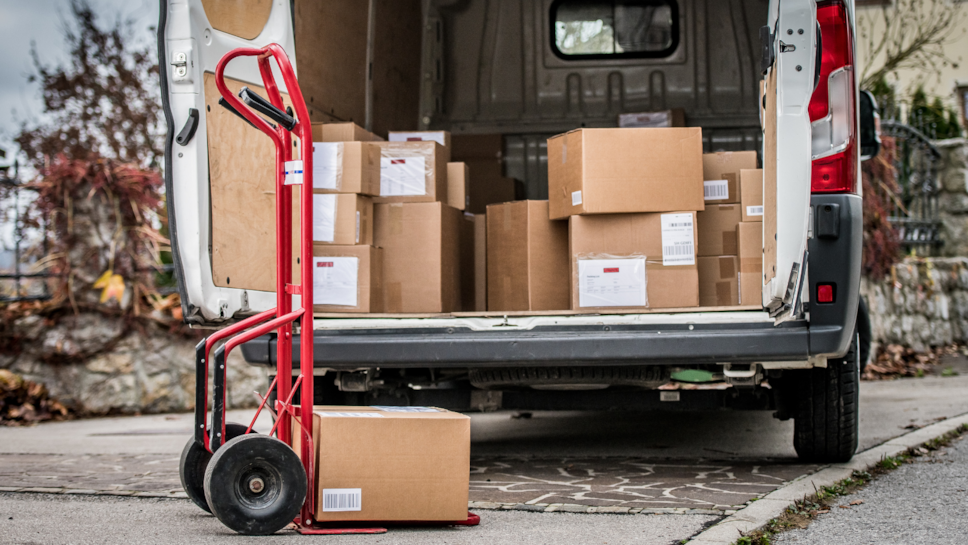
Mail mishaps: new data reveals the shocking frequency packages are left in bushes, bins and elsewhere
An estimated 41 million Brits have dealt with delivery problems, according to new research
We shop online for practically everything, from the latest tech to toilet roll, but new research from Go.Compare home insurance suggests that delivery mishaps could be more common than we think.
In a survey of 2,001 Brits, three-quarters of people (75%) stated they had experienced an issue with something they ordered online.* The most common issue, reported by over a third of people (34%), was receiving a ‘failed delivery’ notice – despite being at home the whole time.
Our packages are also frequently ending up in odd locations, whether it’s a wrong address (29%), a rubbish bin (23%) or a bush (13%).
The most common mail mishaps taking place are as follows:
|
Mail mishap |
% of people who have experienced this |
|
|
1 |
Told there had been a failed delivery, even though I was home the whole time |
34% |
|
2 |
Delivered to the wrong address |
29% |
|
3 |
Package was marked as delivered but never arrived |
24% |
|
4 |
Package was left in a rubbish bin |
23% |
|
5 |
Package was hidden in a bush |
13% |
While delivery issues happen all over the UK, the data also reveals they could be more frequent in Northern Ireland – where 84% dealt with a delivery gone wrong. This is followed closely by Yorkshire and The Humber (82%).
Nathan Blackler, Go.Compare home insurance spokesperson, said: “With the volume of mail circulating the UK daily, and the pressure delivery drivers are under to work quickly, it’s no wonder things don’t always go to plan. However, no-one wants the package they’ve been eagerly waiting for to end up in the bin!
“To reduce the risk of issues – as well as parcel theft – we recommend:
- Scheduling deliveries carefully – if possible, arrange for parcels to be delivered when someone is home, at a time that suits you
- Using secure collection points – if you can’t guarantee you’ll be there when the postman calls, opt for parcel lockers, collection points, or delivery to a trusted neighbour or workplace
- Installing security measures - use doorbell cameras, CCTV, or smart door locks to monitor deliveries. The footage could be helpful if you need to make a claim
- Tracking your deliveries - many courier services provide real-time tracking and notifications to reduce the time parcels spend unattended
- Using parcel theft deterrents - signs indicating CCTV, motion-sensor lights, or secure parcel boxes can discourage thieves
- Thinking carefully about ‘safe spaces’ – many couriers allow you to choose a ‘safe space’ for your parcels to be delivered to if you’re not home, but this could make it harder to make a claim if your package is lost or stolen.”
Nathan added, “It’s unlikely that parcels left outside the home – whether intentionally or otherwise – will be covered by your home insurance. So, plan any important deliveries carefully.”
To learn more about what home insurance covers, visit: https://www.gocompare.com/home-insurance/guide/what-does-home-insurance-cover/
Contact Information
Rubie Barker
Notes to editors
* The research was conducted by Censuswide, among a sample of 2,001 UK Nationally Representative Consumers, aged 18+. The data was collected between 04.11.2025 – 07.11.2025. Censuswide abides by and employs members of the Market Research Society and follows the MRS code of conduct and ESOMAR principles. Censuswide is also a member of the British Polling Council. “Three-quarters of Brits surveyed (75 %) have had problems with parcel deliveries” combines all ‘Yes’ answer options .
** 75% of survey respondents stated ‘Yes’ to the question ‘Thinking about packages and deliveries made to your address, have any of the following scenarios ever happened to you?’ The number of adults (aged 18+) in the UK is 55,022,253 (ONS). 75% of 55,022,253 is 41,266,690.
For further information please contact:
knock.knock@fdcomms.co.uk
Keep up-to-date with Go.Compare on X (Twitter); @GoCompare
About Go.Compare
Go.Compare is a comparison website that enables people to compare the costs and features of a wide variety of insurance policies, financial products and energy tariffs.
It does not charge people to use its services and does not accept advertising or sponsored listings, so all product comparisons are unbiased. Go.Compare makes its money through fees paid by the providers of products that appear on its various comparison services when a customer buys through the site.
When it launched in 2006, it was the first comparison site to focus on displaying policy details rather than just listing prices, with the aim of helping people to make better-informed decisions when buying their insurance. It is this approach to comparing products that secured the company an invitation to join the British Insurance Brokers’ Association (BIBA) in 2008, and it is still the only comparison site to be a member of this organisation.
Go.Compare has remained dedicated to helping people choose the most appropriate products rather than just the cheapest and works with Defaqto, the independent financial researcher, to integrate additional policy information into a number of its insurance comparison services. This allows people to compare up to an extra 30 features of cover.
Go.Compare is part of Future Plc and is authorised and regulated by the Financial Conduct Authority (FCA).
More information can be found here www.gocompare.com or here https://www.futureplc.com/brands/.