
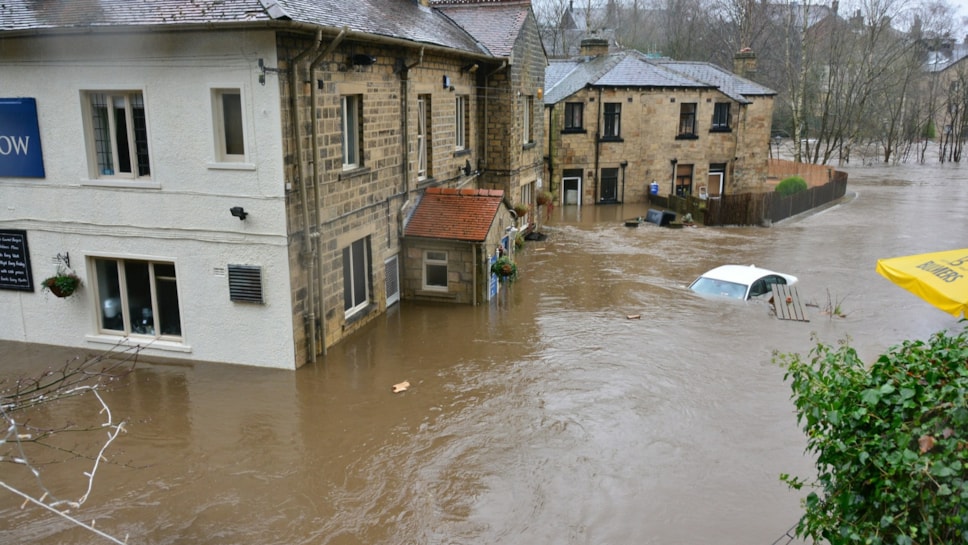
Bristol is the city most at risk to flooding, subsidence and earthquakes, new study finds
- Bristol receives highest overall risk score for floods, subsidence and earthquakes out of England and Wales’ major cities
- Oxford, Leicester and Nottingham also rank within those most at risk
- Plymouth and Newcastle are among the cities safest from natural disasters
New research suggests Bristol is most at risk to the elements, like torrential rain and earthquakes, of all the major cities across England and Wales.[1]
The figures come from the latest risk report by Go.Compare home insurance. The in-depth study ranked cities by their risk level for floods, subsidence and earthquakes, with a maximum score of 10 for each factor, and an overall maximum of 30. Bristol received the highest overall score at 20 out of 30.
The comparison site says Bristol’s high score is mostly due to its high subsidence risk, for which it scored nine out of 10. Bristol is home to the second highest volume of subsidence cases in the country, averaging just over 2 cases per thousand homes across all postcode districts in the city.[2] Bristol also placed among the top 10 for flood risk and it experienced multiple earthquakes last year,[3] giving it the highest overall score.
Oxford is the second highest-risk city, being just one point below Bristol with a score of 19. This score was largely due to its high flood risk, with the comparison site revealing that one in every 24 homes in the city are highly vulnerable to flooding - the largest volume in the country.[4] Oxford also had one of the highest scores for subsidence risk.
Leicester and Nottingham came in third and fourth respectively, indicating that East Midlands properties are especially vulnerable to external factors.
Cities most vulnerable to the elements
|
City |
Earthquake risk score |
Subsidence score |
Flooding score |
Total |
|
Bristol |
6 |
9 |
5 |
20 |
|
Oxford |
1 |
8 |
10 |
19 |
|
Leicester |
1 |
10 |
7 |
18 |
|
Nottingham |
2 |
7 |
8 |
17 |
|
Liverpool |
8 |
4 |
4 |
16 |
|
Leeds |
6 |
5 |
5 |
16 |
|
York |
2 |
6 |
8 |
16 |
|
Cardiff |
6 |
4 |
5 |
15 |
|
Bradford |
7 |
3 |
4 |
14 |
|
London |
1 |
8 |
5 |
14 |
In contrast, Plymouth was found to be the nation’s safest city overall, scoring just seven out of 30 on Go.Compare’s risk scale. The South West city only scored higher than one for a single factor, with its slight flood risk being balanced out by its low scores for subsidence and earthquakes.
Newcastle received a slightly higher overall score of just eight, placing it as the nation’s second safest city from these risks. Norwich, Coventry, Derby and Stoke came joint third, all of which scored 11 out of 30.
Cities least vulnerable to the elements
|
City |
Earthquake risk score |
Subsidence score |
Flooding score |
Total |
|
Plymouth |
1 |
1 |
5 |
7 |
|
Newcastle |
3 |
4 |
1 |
8 |
|
Norwich |
3 |
7 |
1 |
11 |
|
Coventry |
2 |
8 |
1 |
11 |
|
Derby |
3 |
6 |
2 |
11 |
|
Stoke |
3 |
5 |
3 |
11 |
|
Wolverhampton |
6 |
5 |
1 |
12 |
|
Sheffield |
3 |
3 |
6 |
12 |
|
Southampton |
1 |
4 |
7 |
12 |
|
Portsmouth |
1 |
2 |
9 |
12 |
Nathan Blackler, home insurance spokesperson at Go.Compare, said: “As our research shows, some cities are more at risk than others to certain hazards, like flooding, subsidence or even earthquakes, with Bristol and Oxford being especially vulnerable. While this can feel unnerving if you live in one of these high-risk cities, there’s no need to panic, as there are actions you can take to protect yourself, and mitigate the risk.
“For example, choosing tiled flooring in downstairs rooms and moving power outlets higher up the walls can minimise flood damage, while removing trees close to your property and maintaining pipes can protect against subsidence. Getting a home survey before buying a property could help you spot risks, too.
“A good home insurance policy will protect you against flooding, subsidence and earthquake damage, so it’s especially important to get covered if you live in one of these ‘at risk’ areas. It’s likely these risk factors could increase your insurance premium, but you could save a fortune in the long run if you suffer any damage from the elements, and comparing policies will help you to get the best deal possible.
“Check your home policy’s terms and conditions before you buy, though. These can vary by provider, and each has different cover limits and exclusions, so it’s important to make sure the policy you buy provides the protections you need.”
More statistics, as well as further information on how to mitigate these risks, can be found on Go.Compare’s website.
//ENDS//
Contact Information
Alex McCormick
Notes to editors
[1] For each factor considered in the study (flooding, subsidence and earthquakes) each city was assigned a score out of 10 (10 = high risk, 1 = low risk) based on its risk level for that factor. The scores for each factor for each city were then totalled to identify which one was at the greatest risk to these factors overall.
A total of 22 cities across England and Wales were included in the research. A flood risk estimate could not be calculated for Cardiff due to a lack of data, so this city was assigned an average score of five for this factor.
[2] Based on data from Geobear. For each city, the number of subsidence cases per 1,000 homes in each postcode district was identified. The average number of cases per 1,000 across all the city’s postcode districts was then calculated.
[3] Based on 2025 data from Volcano Discovery.
[4] Based on data from the Environment Agency (Risk of Flooding from Rivers and Sea - Postcodes in Areas at Risk – published January 2026). The number of residential properties at a high risk of flooding in each city was totalled, then applied to 2023 ONS data (the latest available at the time of writing) on the number of households in each city.
For further information please contact:
Front Door Communications at go.compare@fdcomms.co.uk
Keep up to date with Go.Compare on Twitter: @GoCompare or you can call 02920 020360
About Go.Compare
Go.Compare is a comparison website that enables people to compare the costs and features of a wide variety of insurance policies, financial products and energy tariffs.
It does not charge people to use its services and does not accept advertising or sponsored listings, so all product comparisons are unbiased. Go.Compare makes its money through fees paid by the providers of products that appear on its various comparison services when a customer buys through the site.
When it launched in 2006, it was the first comparison site to focus on displaying policy details rather than just listing prices, with the aim of helping people to make better-informed decisions when buying their insurance. It is this approach to comparing products that secured the company an invitation to join the British Insurance Brokers’ Association (BIBA) in 2008, and it is still the only comparison site to be a member of this organisation.
Go.Compare has remained dedicated to helping people choose the most appropriate products rather than just the cheapest and works with Defaqto, the independent financial researcher, to integrate additional policy information into a number of its insurance comparison services. This allows people to compare up to an extra 30 features of cover.
Go.Compare is part of Future Plc and is authorised and regulated by the Financial Conduct Authority (FCA).
More information can be found here www.gocompare.com or here https://www.futureplc.com/brands/.